




| Dental Podcast Episode - The Dr. Phil Klein Dental Podcast | Listen on: |

|

|

|

|
and others. |
Episode 817: Fluoride Varnish in 2026: Modern Prevention Through Proven Science
 |
Are you applying fluoride varnish the right way, or are you leaving its full clinical potential on the table?
Kayla Aamoth is a Registered Dental Hygienist since 2014 and a full-time assistant professor at the Fones School of Dental Hygiene, the world's first dental hygiene school, founded in 1913 by Alfred Fones. With nearly a decade of clinical experience in pediatric dentistry and a current academic role dedicated to training the next generation of hygienists, Aamoth brings both evidence-based science and real-world operatory insight to this conversation.
This episode takes a deep dive into the chemistry and clinical mechanics of fluoride varnish, examining how the transition from hydroxyapatite to fluorapatite fundamentally changes a tooth's resistance to acid attack and why that shift matters for every patient in your chair. The discussion covers the role of fluoride varnish within minimally invasive dentistry, its application on both enamel and exposed dentin, and how it integrates with silver diamine fluoride for managing early carious lesions. Listeners will come away with a clinically grounded understanding of why fluoride varnish is not simply a routine preventive step but a sustained fluoride delivery system with measurable biological impact.
Episode Highlights:
- Fluorapatite, formed when fluoride replaces hydroxyl groups in the enamel crystal lattice, resists acid dissolution at a critical pH of approximately 4.5, compared to 4.5 versus 5.5 for natural hydroxyapatite. This difference is clinically significant for high-risk patients consuming acidic beverages, some of which have a pH as low as 2.3, and mirrors the vulnerability difference between enamel and root dentin surfaces.
- Fluoride varnish works as a sustained-release reservoir by initially depositing calcium fluoride globules on the tooth surface immediately after application. These globules break down under acid challenge, releasing free fluoride ions that drive remineralization over weeks to months, meaning the clinical benefit extends far beyond the appointment itself.
- For patients with exposed root surfaces and dentinal hypersensitivity, fluoride varnish precipitates mineral deposits that physically occlude dentinal tubules, providing immediate relief while allowing time for the deeper hydroxyapatite-to-fluorapatite conversion to create a durable lattice structure. Root surface exposure is common enough that it independently justifies universal varnish application beyond just high-caries-risk patients.
- A clinical protocol for managing interproximal incipient lesions in pediatric patients involves applying silver diamine fluoride interproximally using tufted floss, followed immediately by fluoride varnish over the same site to act as a protective barrier that slows dissolution of the silver diamine fluoride in saliva. High-risk pediatric patients with active incipient lesions may benefit from two to four varnish applications per year using this combined approach.
- Updated post-application instructions emphasize avoiding abrasion of the varnish rather than avoiding all eating and drinking. Patients should avoid hot foods, chewing gum, and alcohol-containing mouth rinses for several hours after application, as heat melts the rosin base, gum physically removes the coating, and alcohol dissolves it. Clinicians should always defer to manufacturer-specific package instructions, as recommended dwell times vary by product.
Perfect for: dental hygienists, general dentists, pediatric dentists, and dental residents seeking to strengthen their clinical understanding of preventive protocols, fluoride chemistry, and patient communication strategies around caries management and minimally invasive dentistry.
If fluoride varnish has ever felt like a routine box to check rather than a powerful clinical tool, this episode will completely change how you think about it.
Disclaimer
Viva Learning LLC sites offer content that include opinions, techniques, recommendations, etc. from a variety of writers and speakers that are not necessarily endorsed by Viva Learning LLC, its associates and sponsored Viva Affiliates. Viewers are responsible for verifying the validity, accuracy and relevance of all content before implementing any techniques, products or recommendations into their clinical setting. Viewers understand that Viva Learning LLC, its associates, writers, speakers and sponsored Viva Affiliates are not in any way responsible or liable for any adverse events that may occur (i.e., in a clinical setting or anywhere) based on any information disseminated from Viva Learning LLC sites, including all Viva Learning sites.
The copyrights and other rights to the slides and video contained in a webinar posted on this website are owned by the speaker, Viva Learning LLC, and/or the sponsor company and/or its subsidiaries worldwide. Viewers are only authorized to view the content of the webinar (live and archive) at this Website and are not permitted to screen capture, record and/or download any content displayed in this webinar. You may not make any part of this Website available as part of another web site whether by hyperlink framing on the Internet or otherwise.
The copyrights and other rights to the audio contained in a Viva Podcast are owned by Viva Learning LLC. Viewers are authorized to listen to the content of the podcast and are permitted to download any podcast for personal use only. You may not, however, make any part of this Website available as part of another web site whether by hyperlink framing on the Internet or otherwise.
By signing up for a free webinar and/or podcast you give Viva Learning LLC and/or its Viva Learning Affiliates permission to send you emails alerting you to future CE opportunities and e-learning content.
California State Dental Board Provider Statement
Viva Learning is a registered continuing education provider in the state of CA. Dental Board of CA Provider #RP 5747. Approved through 6/30/2026
Questions regarding our Conditions of Usage, Privacy Policy, or other policy related material can be directed to our support staff by clicking on the "Support" link or you can email us at: support@vivalearning.com.
Approval does not imply acceptance by any regulatory authority or AGD endorsement.
Approval period: 11/1/2025 - 10/31/2029. AGD Provider # 217544
Presenter Information: Kayla Aamoth, RDH
 |
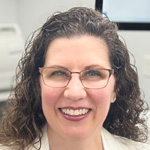
Kayla Aamoth has been a Registered Dental Hygienist since 2014 and currently holds a full-time assistant professor position at the Fones School of Dental Hygiene. She is passionate about improving access to care and has spent much of her career in pediatrics and academia. In her free time, she enjoys traveling, exercising, reading, and spending time with her family. |
Viva Learning is an approved AGD PACE Provider and California State Dental Board Provider of dental continuing education. Viva Learning strives to deliver balanced, objective and clinically relevant information grounded on scientific research. Lecturers who are invited to deliver Viva CE webinars are advised to substantiate their claims with research-supported data and to disclose all commitments to, or relationships with, any commercial entity within the dental industry. In many cases, lecturers are sponsored by a dental manufacturing company, which provides them with support in the form of honorarium and/or dental products and equipment in order to help with clinical presentations. Prior to each live CE webinar, lecturers are made aware of the importance of delivering their presentations without commercial bias, and where appropriate, to mention a variety of different product choices that may be relevant to the subject matter of the lecture, for the educational benefit of the participant.
Transcript
varnishes at the heart of it, that is tried and true and is able to prevent caries.
Welcome to Austin, Texas, and welcome to the Dr. Phil Klein Dental Podcast. I think we can all agree
that fluoride varnish is one of the most common preventive treatments we provide in dentistry, yet
many of us may not fully appreciate the science behind what happens after that small brush of
varnish is applied to the tooth surface. In this episode, we take a closer look at the chemistry
and clinical impact of fluoride varnish and how it acts as a sustained fluoride delivery system.
how it helps shift the balance from demineralization toward remineralization, and why its role in
minimally invasive dentistry is more important than ever. We'll also discuss common application
misconceptions, updated post-treatment recommendations, and practical strategies for helping
patients understand the value of this simple but powerful preventive tool. Our guest is Kayla
Aamoth, a registered dental hygienist since 2014, and she currently holds a full-time assistant
professor position at the Fones School of Dental Hygiene, and that's spelled F-O-N-E-S.
A little information about that school, it was named after Fones, who lived between 1869 and 1938.
He was a Connecticut dentist, widely regarded as the founder of the dental hygiene profession.
And in 1913, he established the world's first dental school for dental hygienists, now known as the
Fones School of Dental Hygiene. And that is where Kayla teaches. She is passionate about improving
access to care and has spent much of her career in pediatrics and academia. Before we get started,
I'd like to thank all of you for tuning in. If you're enjoying the show, please follow us on Apple
Podcasts and Spotify, and even better, leave a review. By doing so, you're not only showing support
for what we do here, but your reviews are instrumental in getting more dental professionals to
listen and benefit from our content. We really do appreciate it. Kayla, it's a pleasure to have you
on the show. Thanks for having me. So I think most of our listeners here today understand that
every single day, teeth undergo two competing processes. Demineralization,
where acids from bacterial metabolism dissolve calcium and phosphate from enamel.
And then we have remineralization, where saliva facilitates the replacement of those lost minerals.
Now, fluoride plays a big role here, which is the central point of our discussion today,
specifically fluoride varnish. Fluoride especially has the ability to dramatically shift this
balance towards remineralization. And we're going to be talking about that in this podcast. And it
does this when calcium and phosphate are available in saliva. So saliva is our friend,
especially if it has lots of calcium and phosphate available. One of the things that is really
special about fluoride is that it accelerates the formation of new mineral crystals within early
carious lesions, like white spots. We see that all the time after ortho. It can actually reverse
the early disease process. And these crystals that fluoride forms, fluorapatite,
are larger. They're more stable and more resistant to future acid attacks than what Mother Nature
gave us, which was hydroxyapatite crystals. So with that quick summary, when we say protecting the
tooth, what is actually happening on a molecular level? And why does the formation of fluorapatite
matter so much in terms of prevention and clinical dentistry? So the transition from our natural
enamel structure, which is mostly hydroxyapatite, to the fluorapatite gives us one really important
prevention, and that's its ability to resist that acid attack. So it's critical pH.
literally completely changes. It goes from having a pH of 5.5 being critical,
which is reached very easily after we've eaten or drinking anything, to now that critical pH has
dropped down in a positive way to about 4.5. So that's a significant difference.
That's the difference between our root and our enamel structure. That difference is going to allow
us to protect that tooth so much better. So that fluorapatite is more resistant. Which is very
important in these high-risk patients, right? They have a diet of very highly acidic drinks,
highly acidic food. Just one can of soda can really create an acidic environment. I don't remember
what the pH of typical soda is. Do you know that number? Off the top of my head, some are as low as
like 2.3. And even some of the sugar-free versions of things that are not soda,
like Powerade or Gatorade Zero, are that low. Without getting too deep into the chemistry,
two fluoride ions are replacing two hydroxyl groups to form fluorapatite.
And that combination, that molecular configuration, increases the resistance not only to an acid
attack, but it also helps reduce the acidity produced from streptococcus mutans by affecting
glycolysis, the mechanism in which it metabolizes nutrients and it gives off acid.
So by slowing that down kind of indirectly, it's antibacterial and also it slows down the
metabolism of the destructive bacteria that produce acid. Let me ask you this.
One of the biggest concepts in modern dentistry is shifting from repairing disease to preventing
and reversing it. Where does fluoride varnish fit into this philosophy of minimally invasive
dentistry, especially when it comes to early carious lesions? Fluoride has been...
the heart of it for longer than we're even maybe willing to realize. So it was such a critical part
of public health when fluoride became a part of our water, became part of a standard dental visit,
especially as a hygienist. Our bread and butter is the public health side and the prevention side
of things. It shouldn't be a subject that we're afraid to talk about. It really is something that's
made a huge difference in a public health crisis. People are keeping their teeth for decades
longer. Caries is the number one disease that humans suffer from.
And we have something in our toolkit that is tried and true, varnishes at the heart of it,
and is able to prevent. carries. Even when we're starting to see the introduction of other things
like the silver diamine fluoride being used with wonderful results, fluoride varnish is still a
part of that modality as well. Do you recommend using fluoride varnish on every patient rather than
just high risk patients? I feel very lucky that I have gotten to practice in a perfect bubble,
so to speak. I've worked in peds for about a decade and fluoride is a covered benefit. So there's
not typically any conversation regarding like money exchanged or finances or concerns about why
we're shying away. I get the occasional parent that's concerned and wants to talk about it. And
I've got even fewer that are opposed to it. But on the whole, I've been able to.
apply fluoride to practically every patient that I see. And now at the university that I work at,
it's part of our standard hygiene appointment as well. So really almost everybody I've seen in the
last 10 years has had fluoride varnish. So before becoming an assistant professor at phones, you
were a hygienist at a strictly a pedo practice. I'm a full-time professor now,
but my... my practice that I was a part of prior to teaching was in peds.
Yeah, it was kids. So, but if you have root exposure on an older patient, fluoride varnish can be
effective on dentin too. And people don't realize that. Yeah. Tell us about that, how it actually
affects the dentin as far as hypersensitivity and protection against acid attacks.
Yeah. So the patients that we see with exposed root surfaces, that root surface,
as we mentioned a moment ago, is much more susceptible to the acid attacks that are happening in
our mouth. And recession and root surface exposure is something that many people have. So I would
argue that there are many people out there that are high risk. which justifies varnish for all,
essentially. But on a microscopic level, the dentinal tubules are those little porosities,
those openings in our teeth. And when that fluoride varnish is applied to those openings,
that precipitation that's happening... on a molecular level is blocking those immediately.
And from there, when the varnish is holding them in place, it's able to continue to allow time for
the chemical reaction and that conversion from the hydroxyapatite to the fluorapatite to really
give it the lattice structure that it needs to stay in place. Yeah, it's pretty remarkable how
fluoride varnish works. I don't know if I mentioned it or not, but fluoride creates this reservoir.
on the enamel. And the reservoir is very, very important because it's essentially made up of,
as you know, calcium fluoride, which is immediately actually produced or created right after the
varnish is applied. So as soon as that hygienist puts the varnish on, you have a reservoir that's
sticking to the tooth that's in like this globule form of calcium fluoride. So when that kid knocks
down a can of soda pop, We know how acidic that is. What's great is that calcium fluoride reservoir
breaks up. We get these fluoride ions that are free to do their thing,
which is to remineralize the enamel by replacing the hydroxyl group with a fluoride ion to form
fluorapatite crystal. And we already talked about the benefits of those crystals. They're much
hardier. They're larger. They're more resistant. Like you said, they don't break down until a pH
of, what'd you say, 4.5? Yeah, 4.5 roughly. Right, versus hydroxyapatite at 5.5.
So this is a remarkable mechanism that keeps on giving because it's not something that just occurs
afterwards. And it keeps giving for weeks and months for some patients. So it's not so fast that
it's, nope, next day our treatment's over, we're done, we're finished. It's something that has
created that structure now for months in between your appointments. Right. So how often do you
replace fluoride varnish, knowing that it does work over time and assuming that the patient doesn't
do anything abrasive to the teeth after you apply for the first, I don't know, four hours. We'll
talk about what your recommendations are to the patient when they get this treatment. But assuming
they're doing everything right and assuming it was applied correctly, how often do you bring them
in to put on fluoride varnish again and reapply to the same surface of the teeth?
For an average patient like myself, twice a year is typically appropriate.
For a patient who is periodontally involved, who has lots of restorations,
who has a high acidic diet, a high sugar diet, incipient lesions,
exposed root structure, xerostomia from medications, any number of health conditions that can
contribute to xerostomia. it's more appropriate to do it more often if it's required.
I've had pediatric patients that come in with incipient lesions and we have a treatment approach
where placing SDF and varnish is being applied over that SDF at that localized site.
They have it done ideally two times within six months, sometimes as many as four times a year.
And I've seen really amazing things happen where... I know anecdotally speaking,
we can't say, okay, we've reversed a cavity entirely. But the radiographs of these patients would
indicate otherwise. Yeah, no, I want to hear more about how you use STF with fluoride varnish
because I haven't heard much about that. I know that STF by itself, leaving it on affected dentin,
in other words, not to peel off all that. dentin that's affected, but just take the mushy infected
dentin off and then put the SDF on and the remineralization seems to be pretty good. Now you're
saying, or you tell us, how do you clinically integrate both fluoride varnish and SDF?
How do you do that? So on an appointment where I take a radiograph, I see a child that has those
interproximal incipient lesions and they're nowhere close to the age of exfoliation. I often use...
tufted floss, where I floss Interprox to the areas that are of concern. I take the SDF,
I dot it on either side, floss it through back and forth, remove the floss, and then I take the
varnish as I would normally, because this is usually following a hygiene appointment, and apply it
everywhere, but also over that site. With the thought process being that I don't want the SDF to
dissolve very quickly in saliva, and I don't want it to wash away, and I'd like to keep...
of that kind of suspended and locked in in that nice little varnish reservoir for as long as
possible, which can be a challenge for anybody, but especially for children. Is that something you
picked up at the pedo practice you worked at, or is that based on some evidence-based articles
that you've read? Great question. So picked up in the pedo practice for sure, but something that
the pediatric dentist that I worked under had been investigating amongst.
both herself and her peers and colleagues that were in PEDS as well. Did you ever have some sort of
kind of a longitudinal study? I'm not trying to pry here for evidence-based stuff,
but did you keep track of these patients where you did it just with the SDF and then you did it
with both and you saw a difference? You know what? It would have been wonderful had we done one.
The answer to that question is probably not. No. Yeah, the answer is no. But the results that we
saw were wonderful. But it made you feel good. It made you feel good. Sure did. And if we were to
pull, if we were to audit all the charts for all the kids that we've treated that way and looked at
the bite wings of the pre and the bite wings of the post, it's pretty incredible. We saw some
really wonderful things. Yeah. No, listen, I think it's fantastic. First of all, using fluoride
varnish is a major benefit to the patient, especially a child, especially with an erupting tooth.
I mean, right. You can do it as the teeth are erupting and you know how carries susceptible kids
are as their teeth are coming in. You could use it on primary teeth. Now, when you put this varnish
on, I spoke to one dental hygienist and she just puts it on the buckle surfaces and swipes it
across the arches. You know, the idea is to have the fluoride varnish reservoir available on the
tooth so that when it's needed, it flows into the saliva, grabs the calcium and phosphate and
deposits itself where it's needed. It doesn't need to be fully covering the whole tooth.
Is that correct? My argument for that would say, sure, it's offering a reservoir.
And certainly there's been plenty of times where I take varnish and I slap it on my glove and I do
a quick finger swipe for a pediatric patient if they're restless or noncompliant. And I'm satisfied
with that application. It's on their teeth. Fantastic. I think in an ideal world,
we've got patients that are probably cooperative enough where we can take that extra 30 seconds.
to make sure that we have really applied it the correct way. Because in a perfect world,
we're applying it to all surfaces on a bendy brush thinly to make sure that compliance is there.
It's not applied too thickly. It's not globbing off. They're not trying to remove it prematurely
because it's uncomfortable. And it's a little harder to finesse the fluoride on when it's finger
swiped. I certainly am guilty of that practice many a times, especially with pediatric patients.
Yeah, it's certainly better than nothing, no treatment at all. So the ideal treatment, let's talk
about the ideal product, not only the product itself, but how it's packaged, the delivery of the
material to the tooth and the clinical aspects of what you need to do to prepare the tooth. Because
there's some misconceptions about you need to have the tooth totally dry. You need to put it on
really thick. What's the latest and the greatest as far as? someone like you who's done this God
knows how many times, what are you seeing success with and what is your regimen? We know at this
point that Fluoride is hydrophilic. It used to be the thought that once upon a time, that tooth
needed to be bone dry like you were placing a sealant, and that was going to be how varnishes
worked. And it's very possible that prior to my time in the profession, that's what the first
varnish marketed itself as such. But the evidence shows otherwise now. So you can have a patient
kind of suck the air through their teeth. You can do a very quick dry, a little gauze wipe, just to
make sure that... not so moist that it's not actually having a chance to really adhere um if you
have a little bit of saliva you've got no issue getting that fluoride varnish on um Is it preferred
to have a little moisture on the tooth rather than dry? Yeah, I would say for patient comfort, not
only, but for the actual product itself. Like I said, the fluoride is hydrophilic, so it doesn't
mind having a little bit of moisture. It's able to be soluble in that saliva, and we're prompting
that chemical reaction. Either way. So not a huge issue. So you put it on with a bender brush,
which comes with, I know you're a big fan of fluoridose. Yes. Yep. We use that at the university
that I work at. Yeah. What's good about that? What are you looking for in a fluoride varnish where
fluoridose meets that criteria? Ideally, we want something that's sodium fluoride, 5%,
which it meets the criteria. We want something that's easy to use, something that doesn't feel like
grainy, something that tastes good. These are really the complaints that the feedback that we get
from our patients. So I think it kind of ticks all those boxes. The Bender Brush. is great because
it's already included in the reservoir so the nice part of that and especially when i have students
that are applying fluoride for like literally the first time to somebody's mouth and they don't
realize that brushes bend and i'm watching them try to struggle to get the linguals with a straight
brush it's like The tiny adjustment of being able to reach over and grab their bender brush and
bend it and see like, okay, try it now on the linguals. And they're like, wow, this is so much
easier. Those are nice moments. Yeah, that was a great invention by that company, Centrix. Yeah,
I mean, something so simple with a... that brush where you can bend it, custom bend it where it
doesn't break. Probably trillions of them have been used in the dental profession over the years.
Watch their minds be blown as they realize how easy that feels. Yeah, I knew the founder of that
company, Dr. Dragon. There's actually a flavor named after him. I don't know if it's Dragon Berry
or something, but Dr. Dragon was the founder of Centrix that makes this. And he was a phenomenal
guy. Phenomenally brilliant guy and such a nice guy. And we miss him. He passed away a couple of
years ago. So let's talk about the actual application. You use the bender brush.
You put a thin coat on because you don't need much. And you do all the teeth surfaces.
Personally, with my students, I still aim to make sure that they've got a swipe. across the
buckles, a swipe across the occlusals, a swipe across the linguals. They bend that brush to get the
linguals a little bit better. It takes all of, you know, three seconds in its totality to get all
the surfaces. So why not? Why not spend those extra six, seven seconds to get the fluoride on?
Absolutely. And what are the instructions that you give the patient? Now,
if it's a kid who's unable to really understand what's going on, you'll be talking to the parents
or whoever's taking care of the child. But what are the post-application instructions that you
give to the patient? So the nice thing is I all... will always tell students,
especially default to your package instructions, default to your package instructions, because
there are slight differences between manufacturers of fluoride about time for efficacy and how long
they want that to actually stay on there undisturbed. There's like most of them say,
hey, you can eat and drink right away. You don't want to brush or floss for several hours and good
luck. Have a good day. Try to stick to softer, normal temperature foods if you can. That's usually
how I summarize it. Every product's a little bit different. So the key thing here is versus what
used to be instructed to the patient is that it's not so much that you can't eat or drink for four
or five hours. It's that you don't want to abrade the varnish off of the tooth for four or five
hours. So therefore, you could eat something that's not abrasive. You could have some...
guess you can have some soup or something soft, but I guess it's recommended to avoid a bag of
ranch-flavored corn nuts or a couple of candy apples. I've tested this theory because I've wanted
to see, okay, what happens if I don't follow these instructions when I've applied the fluoride on
myself? Because we tell the patients, stick to soft, normal temperature foods, avoid alcohol.
So for example, like chewing gum immediately pulls it right off my tooth.
Hot foods kind of melt that varnish rosin. Okay, so soup, soup, it's got to be room temperature.
Yeah, we're going to toss soup, unless we're talking like a cold summer soup. Right. All right, so
we'll stick to gazpacho. It melts that rosin, so it doesn't really give it a chance to firm up,
which our saliva is obviously working to firm it up, but when it's too warm and it's not just 98.5
degrees in your mouth. it melts it anything super super crunchy so like hard tortilla chips types
of things. I haven't seen so much of an issue with the hard food selection.
It's more the hot food, the chewing gum for those who are 21 plus or prefer mouth rinse,
the alcohol and saying, okay, don't go and have a glass of wine after this or go rinse with your
Listerine mouth rinse that contains alcohol after this because that will also dissolve it. So the
instructions are clear. The key thing is putting a thin layer on and you want to get them back
twice a year unless they're high risk. Yeah, if I've got patients with incipient lesions that are
being addressed actively with... what we were talking about prior with things like the SDF or more
fluoride applications to address those spots. Certainly we want them in more often four times a
year. Or patients who are coming in with like regular periodontal maintenance or scaling and root
planings where we've really got exposed root surface or, you know,
concerns where we're seeing recession or things that we are actively monitoring more regularly is
appropriate. At any time we are polishing a tooth and removing. that acquired pellicle,
it's appropriate. There's no reason that most people would not be considered high risk.
Like we said, caries is the number one disease of human beings. And our modern diet is just like,
it's crazy. The minute you eat or drink anything, we're under that acid attack right away. I mean,
there's a great doctor who teaches a lot, Dr. Brian Novy. And he says one of the best things you
can do for your patient is fluoride varnish, is to create that reservoir of fluoride. and have it
working for you all the time, especially if you, like you said, if you diligently reapply it twice
a year. Now, do you prescribe fluoride toothpaste, like 5,000 parts per million fluoride
toothpaste, in addition to fluoride varnish on some of your patients? Certainly. In pediatrics,
all the time. We have patients who are in orthodontic appliances and those white spot lesions are
nasty and they happen so regularly. And it's such a shame to have a beautiful, like young
adolescent that just got their braces off and they're aligned and they're feeling so good about it.
And their parents look at their teeth and like, what are these? horrible looking spots everywhere.
So we try to make sure anybody who's in active appliances is using the Prevident 5000 or ClinPro or
whatever their choice of product is for the 5000 parts per million fluoride,
at least at night. Right. So that combination of varnish on there plus the professionally
prescribed toothpaste, which is 5000 parts per million, the varnish I think is 22,000 parts per
million. Almost 23,000. I think it's 22,600. Regular toothpaste,
I think, is a thousand parts per million if you buy a fluoride toothpaste. Yeah. So what is your
response to the parents who have read in a lot of the media that fluoride is toxic and fluoride
causes cancer? And then you send the kid home with a prescription to buy a fluoride toothpaste and
then you're putting fluoride varnish on, which has, you know. a pretty strong load of fluoride in
it, although very little of that, and there's plenty of evidence to show that, gets absorbed
systemically, that topical fluoride. They're not eating the stuff. What's your response to the
patient who really is very fearful of fluoride for her child or his child? I love this question
because I get asked this question every day of my career.
I have a few strategies of approaching this. The first strategy is I always want to know where
people are coming from. Are they just genuinely uninformed? They have no clue about fluoride.
They're curious. They want to know because that's a different approach than the parent who is like.
Absolutely not. This is a deadly neurotoxin. When I have those patients, I still try to put the
framework of saying, okay, I hear your words. I hear what you're coming from. We might disagree on
these subjects. I would argue that any of the major minerals become neurotoxins at incorrect
levels. That's supported by evidence and data. So calcium at incorrect levels,
phosphorus at incorrect levels, manganese at incorrect levels are... considered neurotoxic.
Anything in incorrect dose is a problem for our body. We don't want too much water.
We don't want too much salt. We need just the right amount to keep things in balance,
right? So I try to get at least the groundwork laid for hearing where they're coming from,
trying to figure out what our next approach is. For the parents that are just genuinely uninformed,
great. We've got an opening to talk about it. Fluoride is a mineral that exists in our planet.
in our soil, just like any other mineral, just like calcium, just like phosphate, all of the things
that we need in our body to function. And the evidence is not that we're just applying this for ha
-has. We're applying this because it legitimately is creating a chemical reaction on your tooth
structure that is making your tooth so much less susceptible to a cavity. And it's your choice.
Nobody's going to force you to do these things. But if the approach is a lifetime of...
versus a 10 second application of something that's going to aid. I think most people are open to
hearing those conversations and having a conversation about it as the provider. I want it to feel
like open dialogue. I don't want it to feel like a judgment zone. But we also as the professional
are who they're going to for advice. So, you know, they might get their information off of. TikTok
or Facebook and a video that they saw. And they're allowed to think what they would like to think,
but it is still my job as the paid professional that went to school for several years to learn
about these things, to be able to help convey that information. Yeah, no, I think that was very
well said. And, you know, when you eat a can of sardines, you're getting... heavy metals.
When you eat chocolate, depending on where that chocolate was harvested from, what the soil was
like, you're getting heavy metals. It's a little bit more difficult to deal with the patient that
says, listen, my kid is drinking water and they're getting fluoride from water. Why do they need
this? Because now this is extra fluoride that is beyond what's recommended by our municipality and
they believe, you know, they think the government knows everything. So they go by what the
government says. I would rather listen to you, the dental hygienist. But what's your answer to that
when they think they're getting adequate supply of fluoride from the water? Yeah, this is where I
usually find my common ground, even with the patients who are vehemently opposed to fluoride.
I understand that in some communities, water is fluoridated and that's our city water typically.
I live in an area where, yes, there's some city water, but there's also plenty of wells that exist.
And so there are plenty of patients that see us and know off the top of their head, oh. I'm on well
water, I get no fluoride. I also talk to them about the halo effect. And so we talk about,
yes, they're ingesting food that's been grown in areas that has been watered with water that's
fluoridated. So there is that trickle down effect of fluoride, even if I'm not ingesting it in my
water, or even if I am ingesting it in my water, that can be evidence that we're at least getting
it from some sources. I would rather us take it out of the water entirely, completely, and have
zero water fluoridation and know that everybody's going to be compliant with the topical fluoride
because the topical is really where the bread and butter is. Now, the only downside of that is...
Yeah, it puts it to rest. It puts their concerns... Well, I know, but the downside of that is there
are a lot of people that don't have access to people like you. And the only place they would get it
would be from drinking water. But, you know, in an ideal world, if everybody could go to see a
dentist... but unfortunately they don't, everybody doesn't have that opportunity and that
privilege, then what you're saying makes total sense. Get it out of the water because the
comparison between how much fluoride you're going to get from fluoride varnish versus the water, it
would just take that argument off the table. And I would argue that the systemic is really only
making an impact during in utero or in early stages as the tooth bud.
So there's so it's just much less effective. It's still it's still one of the best public health
progress forward things that we've done in many, many decades. But it's still not it's not enough.
Right. It's not doing well. No, that's a good point. We didn't have the science in the 70s and 80s
of the fluoride varnish that we have now. So no, no question about it. And for governmental
decisions to take place where they change these things, it's like, you know, turning around the
Titanic. Absolutely. You just, it's a very slow process. I didn't mean to use the word Titanic in a
negative way. Another sensitive subject. Yeah, we know what happened to that. So I think Kayla,
it's clear from this conversation, the benefits of using fluoride varnish and your enthusiasm,
both in the operatory and also on this podcast clearly shows. your dedication and belief in in
treating patients in a in a preventative way where you can actually stop or even reverse incipient
carries which is just so important in this profession. Just curious, as we wrap up this podcast,
what got you so motivated to be so excited about Floride Varnish? Was it a mentor that you had in
school? I feel very fortunate that I have early memories of like swish and spit programs and myself
in school. And I always had crazy amounts of cavities. My mom had crazy amounts of cavities.
So it's... I've always been a little bit of a dental nerd and being able to advocate and give
patients information, especially with the background in pediatrics, I feel that I've been able to
be in this like perfect cocoon of a world where insurance isn't an issue and I just kind of get to
do top treatment all of the time, whatever's best for the patient. And then same thing in
transitioning to academia, like I haven't had some of those barriers. I feel very fortunate and
very grateful that I have. practiced in a way that's allowed me to avoid some of those bureaucracy
things and just have been able to say, here's the best course of treatment and let's move forward
with best course of treatment. And I've received very little pushback from my patients, mostly
because we can sit and have a conversation about it. But just being able to see in real time the
impact that we've made on kids. I've taught public health before and being able to see the impact
that we make when we do these missions. for our free dental clinics or when I take students out to
see people in the public who don't have access to dental care. It's such a small, easy thing.
It's portable. It's I can bring it along. You can slap it on with a gloved finger if you have to.
Accessibility is there for everybody. What you're saying is so true. And you're also emphasizing
the fact that being a health care provider. is so satisfying to your soul. I mean,
you are a fulfilled, happy person because you have the ability and the knowledge to help other
people, even at a very young age, that literally could change the course of their life because if
they're treated with something as simple as fluoridose, which I know is a great product,
but it's, you know, it's a fluoride varnish. It's not... not shooting something up to the moon and
putting satellites in so we can get Starlink internet. We're putting, you know,
I happen to use Starlink, so I like Starlink. Elon Musk will be happy when people hear this.
Shameless, shameless plug for you. Right. He actually lives in Austin, Texas. But that's so funny.
Yeah. But the point is, it's not a complicated product, but beyond the actual product itself,
you're the one that has to convince the patient's parents or the whoever the patient is,
the benefit of. applying this and how it can actually change the course of their dental path where
they don't get into this cycle you know the cycle of doom where they continue to have dental care
because we're always treating the problem you're actually in many cases reversing the problem or
preventing it from ever happening in the first place and that's the power of what you're doing and
Again, education is key. Education's key. We can talk them through those carries process.
We can educate them on what's happening on a molecular level. People can usually grasp these
things. Knowledge is power. Once they're informed, knowledge is power. Any dentist or any dental
hygienist that's listening to this podcast has to realize that they have the capability of changing
someone's life. And it's not something to be. looked at lightly i mean it's a it's a real privilege
to be able to do that and i can see in your face i know it's an audio podcast but there's
satisfaction and happiness in you because you have the capability of doing that which is um you're
blessed and it's it's a really nice thing to see anyway um kayla it's been a pleasure talking to
you i hope that our listeners tomorrow if they don't have fluoride varnish in that practice They go
to the dental practice owner and said, hey, you need to listen to this podcast. Yeah, it's time.
Kayla said it's time. Listen, keep up the great work. We're very happy to have you. And we'll have
you on the show again. Thank you so much, Kayla. Thank you, Dr. Klein. It was nice talking with
you.
 Episode 817. Fluoride Varnish in 2026: Modern Prevention Through Proven Science
11/2/2026 - CE Credits: 0.5 CEU (Take Exam)
Episode 740. The Prevention Paradigm: Why Dentistry’s Future Starts Before Disease Begins
2/2/2026 - CE Credits: 0.5 CEU (Take Exam)
Episode 730. Breaking the Stigma: Why Every Dentist Should Be Using Silver Diamine Fluoride
12/22/2025 - CE Credits: 0.5 CEU (Take Exam)
Episode 691. Targeted Prevention: The Power of Thorough Risk Assessment
8/4/2025 - CE Credits: 0.5 CEU (Take Exam)
Episode 591. Treating Decay Medically: No Drilling, No Anesthesia; Restoring with Silver Diamine Fluoride and GI
8/14/2024 - CE Credits: 0.25 CEU (Take Exam)